
Your water heater is one of the hardest-working systems in your home. It runs quietly in the background every single day, heating water for showers, dishes, laundry, and everything in between. And most homeowners never give it a second thought until the morning there is no hot water.
That is exactly when we get the call.
The good news is that a little knowledge goes a long way. Understanding your water heater’s lifespan, what maintenance actually looks like, and the early signs that something is off can save you from an inconvenient surprise and, in some cases, a much more expensive one. Here is what every Boston homeowner should know.
How Long Does a Water Heater Actually Last?
The honest answer depends on the type of system you have and how well it has been maintained. Traditional tank water heaters typically last 8 to 12 years. Tankless, or on-demand, water heaters can last 15 to 20 years with proper care. That is a meaningful difference, and it is one of the reasons homeowners increasingly consider going tankless when it is time to replace.
But regardless of which system you have, a few factors can significantly shorten the lifespan. Greater Boston’s water supply tends to run on the harder side, which accelerates sediment buildup and mineral deposits inside the tank. Skipped maintenance lets small issues compound quietly over time. A unit that was not installed correctly from the start will underperform and wear out faster. And a family of five using a tank sized for three will work that unit harder than it was ever designed for.
What Preventative Maintenance Actually Looks Like
Most homeowners have never thought about maintaining their water heater, and that is understandable. It is not an obvious task. But a few simple steps each year can add years to the unit’s life and prevent the kind of failure that causes real damage.
Anode Rod Inspection
Inside your tank is a metal rod, usually magnesium or aluminum, that slowly corrodes over time to protect the tank walls from rusting. Think of it as a sacrificial component. When it is depleted, your tank starts to take the hit instead. The anode rod typically needs to be checked every two to three years and replaced once it has corroded down to the core wire. If yours has never been looked at and your unit is more than five years old, it is worth having a professional take a look.
Sediment Flushing
Over time, minerals from your water supply settle at the bottom of the tank. That sediment layer acts as insulation between the burner and the water, forcing your unit to work harder and run longer to heat the same amount. It is also responsible for the rumbling or popping sounds that homeowners sometimes notice. Flushing the tank once a year, which involves draining a portion of the water to remove built-up sediment, is a straightforward process that improves efficiency and extends the unit’s life.
Temperature and Pressure Relief Valve Testing
The temperature and pressure relief valve, commonly called the T&P valve, is a safety device that releases pressure if your tank gets too hot or pressure builds too high. It is a critical component, but one that can fail silently if it is never tested. A quick check once a year confirms it is working correctly. If it drips or does not reset properly after testing, it needs to be replaced.
Not sure when your water heater was last serviced? We offer free plumbing inspections across Greater Boston MetroWest. Book yours with Ulta Home today.
Signs It Might Be Time to Act
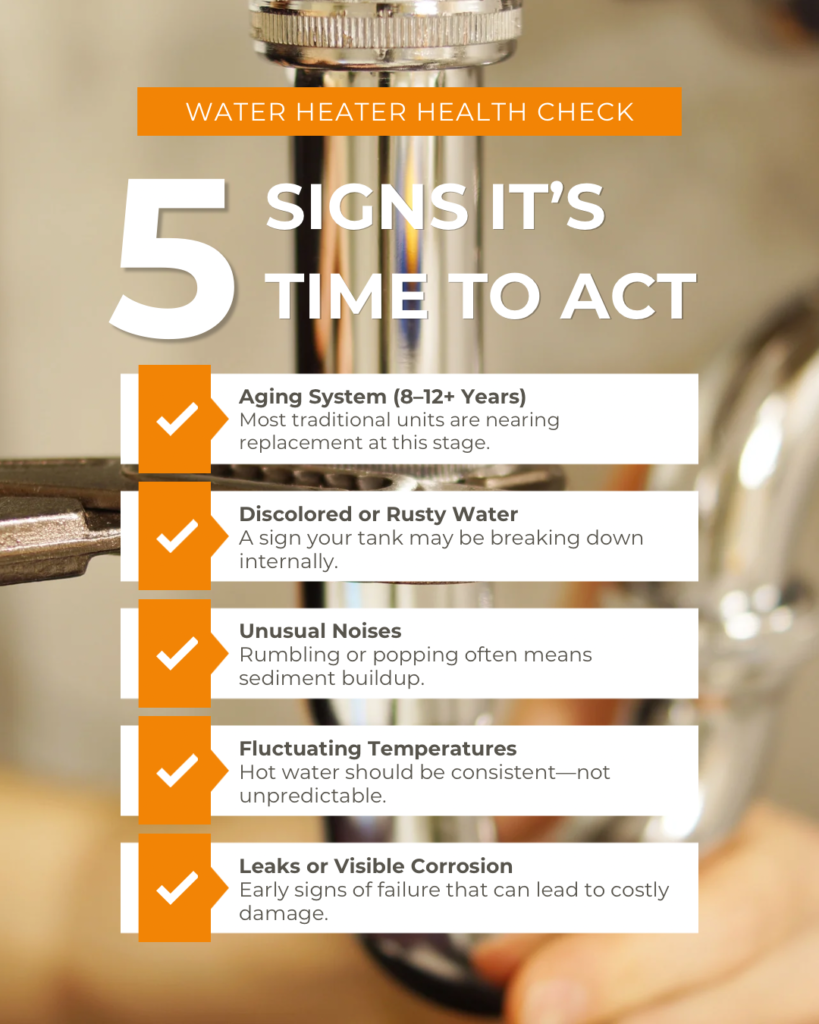
Even with good maintenance, every water heater eventually reaches the end of its useful life. Age is the most straightforward signal: if your unit is approaching or past the 10-year mark, it is worth having it evaluated even if it seems to be running fine. Most failures happen in the final few years of a unit’s life, and planning ahead gives you options.
Rust-colored hot water is another indicator worth taking seriously, especially if it only appears when you run the hot tap. That discoloration often points to internal corrosion, which usually means the anode rod has been depleted and the tank itself is beginning to rust. Similarly, rumbling or popping sounds typically indicate heavy sediment buildup. If a flush does not resolve it, the unit may be past the point of easy repair.
Inconsistent water temperature is also a common sign of trouble. If you are getting water that fluctuates between hot and lukewarm, or that takes longer to heat than it used to, your heating element or burner may be on its way out. And any visible corrosion around the tank fittings, or water pooling near the base of the unit, warrants a closer look. Small leaks have a way of becoming large ones quickly.
Tank vs. Tankless: What to Know Before You Replace
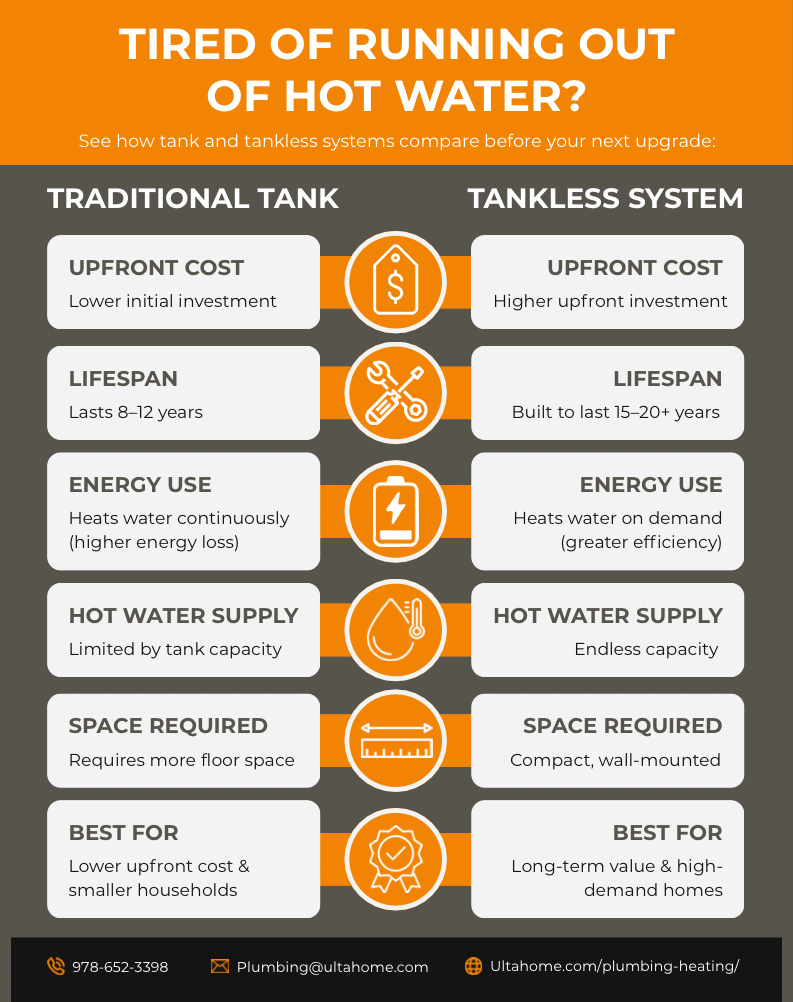
If you are approaching replacement, it is worth understanding the two main options before making a decision. Traditional tank water heaters have a lower upfront cost and are the most common replacement choice. They are a good fit for budget-conscious homeowners or lower-demand households. The tradeoff is a shorter lifespan and less energy efficiency, since the tank is always keeping water hot even when no one is using it.
Tankless water heaters cost more upfront but last significantly longer and only heat water when you need it, which reduces energy use over time. They are compact, wall-mounted, and tend to be a good long-term investment for larger families or homeowners planning to stay in their home for many years.
There is no universally right answer. The choice depends on your budget, your household’s hot water usage, and how long you plan to stay in the home. The right conversation starts with knowing your options, and we are always happy to walk through them with you.
Thinking about going tankless? Talk to our team.
Water Heater Maintenance and Replacement in Greater Boston: What Homeowners Need to Know Before It Becomes a Problem
Water heater problems rarely announce themselves ahead of time. By the time most homeowners notice something is wrong, they are already dealing with either no hot water or water damage. The homeowners who avoid that scenario are the ones who know roughly how old their unit is, have had it looked at within the last year or two, and have a sense of what the warning signs actually look like.
If you are not sure where your unit stands, that is a perfectly normal place to be. Ulta Home offers free plumbing inspections across Greater Boston MetroWest. Whether your unit is aging, acting up, or simply has not been checked in a few years, our team will give you a clear and honest assessment with no pressure and no upsell.
Serving Ashland, Framingham, Wellesley, Weston, Westborough, and surrounding communities.