
Nobody calls a plumber about the leak they can’t see. That’s the whole problem. A burst pipe gets an emergency call within the hour. A slow drip inside a wall gets nothing, sometimes for a year or more, while it quietly pads the water bill and soaks into framing, insulation, and subfloor.
Our plumbing team finds these all the time, and the homeowner reaction is nearly always the same: how long has that been going on?
Here’s the frustrating part. Hidden leaks leave clues. Plenty of them. Most people just don’t know which of the small oddities around their house are worth a second look. So below is the list we walk Greater Boston homeowners through, seven signs worth checking, ending with a ten-minute test that settles the question using nothing but your water meter.
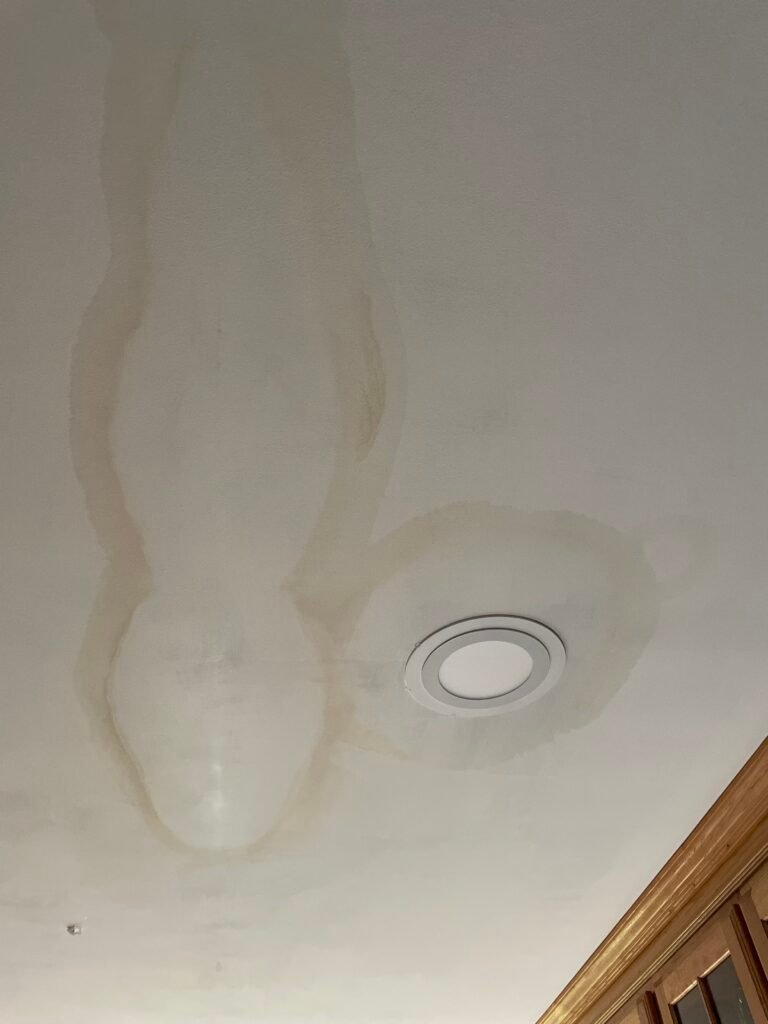
1. Water Stains with No Obvious Source
A brownish or yellowish stain on a ceiling or wall is the classic giveaway, especially when it shows up somewhere that makes no sense. No bathroom above it, no roof directly overhead, nothing spilled.
Water travels. A leak in a second-floor supply line can run along a joist and surface as a stain six or eight feet from the actual problem, which is why the location of a stain tells you less than people assume.
Whatever you do, don’t just prime over it. We see this constantly. The stain disappears for a month or two, bleeds right back through, and now the leak behind it is a month or two older and a month or two more expensive.
2. A Running Toilet (Including One You Can’t Hear)
A running toilet doesn’t feel like a leak because the water goes down the drain instead of into your walls. Your water bill disagrees.
A toilet with a worn flapper can waste hundreds of gallons a day. Hundreds. It’s routinely the single biggest hidden water waster in a home, and it often runs silently except for a faint hiss or an occasional phantom refill when nobody has flushed.
Quick test: put a few drops of food coloring in the tank and wait 20 minutes without flushing. If color shows up in the bowl, water is escaping past the flapper and the toilet is running whether you can hear it or not.
3. A Water Bill That Keeps Climbing
Your usage should be reasonably predictable. Some seasonal swing is normal, especially in summer if you’re watering a lawn or filling a kiddie pool. But if your bill has crept up over two or three cycles and your habits haven’t changed, something is using water that shouldn’t be.
Pull your last six bills and compare the usage numbers, not the dollar amounts (rates change too). A steady, unexplained climb is worth investigating before it gets worse. If you’d rather have a professional track it down, Ulta Home’s plumbing team offers diagnostic visits across the MetroWest area, and finding a leak early is dramatically cheaper than repairing what a leak leaves behind.
4. Musty Smells That Won’t Go Away
That damp basement smell has a cause, and sometimes the cause is not the basement.
A persistent musty odor in one area of the home, especially near a bathroom, under a sink cabinet, or along one section of wall, usually means moisture is sitting somewhere it can’t dry out. You’ll often smell a hidden leak before you ever see it.
5. Warped, Buckling, or Soft Flooring
Hardwood that’s cupping or crowning in one spot. Vinyl lifting at a seam. A section of floor near the dishwasher that feels a little spongy underfoot. Flooring reacts to moisture from below long before water becomes visible, and kitchens and bathrooms are the usual suspects because that’s where the supply lines live.
Ignore this one long enough and you’re no longer pricing a plumbing repair. You’re pricing a plumbing repair plus a new subfloor plus new flooring.
6. Mold in Places That Should Be Dry
A little mildew on shower caulk is a cleaning issue. Mold blooming on a bedroom wall, inside a closet, or on baseboards away from any water source is a moisture issue, and the moisture is coming from somewhere.
Mold needs consistent dampness to grow. When it appears in a spot with no obvious water nearby, a concealed leak inside the wall cavity is one of the first things worth ruling out.
7. The Water Meter Doesn’t Stop Moving
This is the ten-minute test, and it’s the closest thing to a definitive answer you can get without opening a wall. Here’s how to run it:
- Turn off everything that uses water. Faucets, ice maker, washing machine, irrigation, all of it.
- Find your water meter and look for the low-flow indicator, usually a small triangle or star-shaped dial.
- Watch it for a minute. If it’s turning while the whole house is off, water is moving, and it’s going somewhere it shouldn’t.
- Still not sure? Write down the meter reading, wait an hour or two without using any water, and check again. Any change confirms it.
Why Summer Makes Leaks Easier to Spot in New England Homes
There’s a reason August is a smart time to run through this list in Greater Boston.
Summer humidity amplifies the evidence. Musty odors get stronger when the air is already damp. Mold grows faster. Wood flooring that’s absorbing moisture from a slow leak swells more noticeably in July than it does in the dry heat of a January furnace season. Problems that hide all winter tend to show themselves now.
Summer usage patterns also make the math easier. Yes, watering the garden bumps your bill, but that’s a swing you can account for. A leak on top of it pushes the number past what irrigation alone explains.
And practically speaking, this is the season to fix things. Plumbing repairs found in August get handled on your schedule. The same leak discovered in November, when every plumber in MetroWest is buried in heating calls, becomes a much less convenient project.
Spotted One of These Signs? Here’s What to Do
Don’t panic, and don’t grab the drywall saw. Start with the meter test to confirm water is actually moving, note where the symptoms are showing up, and get a professional set of eyes on it.
Ulta Home’s licensed plumbing team serves homeowners across Ashland, Framingham, Wellesley, Weston, Westborough, and the surrounding towns, and every visit includes a free diagnosis. We’d rather find a five-dollar flapper problem than have you wait until it’s a five-figure water damage problem.
Think you might have a hidden leak? Contact Ulta Home to schedule a plumbing inspection today. Catching it this summer is the cheapest this problem will ever be to fix.